ChemPraxis Lab Practical

A-level & IGCSE Practical Experiments Lab in Puchong

A-Level Chemistry Lab & Practical Experiments

Step into the 1st ever A-level & IGCSE tuition center with established lab in Malaysia, ChemPraxis, where theory meets hands-on exploration for comprehensive A-level and IGCSE mastery.

Our state-of-the-art lab ensures a holistic learning experience, covering every topic with in-depth
theory and practical applications.

Expert educators guide students through a curriculum that seamlessly integrates theoretical
knowledge with real-world application.

Join ChemPraxis to embark on a journey of enriched learning, bridging the gap between theory and practice, and setting the stage for achievement in A-level and IGCSE examinations.

A-Level & IGCSE Lab Practical Fees

Personalized the lab session at your convenient time”
Group Fees
IGCSE Lab Practice RM 280/ session (1.5 hours)
A-Level Lab Practice RM 330/ session (1.5 hours)

Lab Manuals & Exam Guides

Lab Practical Manual

IGCSE/A-Level Chemistry Lab Experiment

FAQs About A-Level & IGCSE Lab Practicals in Malaysia

What is an A-level chemistry practical?
A-Level chemistry practical is the hands-on component of the syllabus (Paper 3 for AS, Paper 5 for A2) where students carry out real experiments — titrations, qualitative tests, and measurements — rather than answering theory questions. It tests whether a student can actually handle apparatus and record accurate results, not just recall facts.
How do I prepare for A-level chemistry experiment exams?
Preparing for A-Level chemistry practical exams means repeating the core techniques — titration, qualitative analysis, and measurement — until they're familiar, not just reading about them. Review the mark scheme for each technique so you know exactly what examiners check, and practice recording and presenting data in the format Cambridge expects.
Where can I find A-level chemistry lab resources?
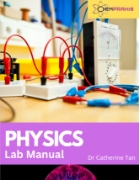
ChemPraxis publishes downloadable practical manuals for A-Level Chemistry (9701), Biology (9700), and Physics (9702), alongside recorded lab experiment videos covering common tests like flame tests and titrations. These are available directly on this page for students to review before or after a lab session.
How can Chempraxis help with A-level chemistry practicals?
ChemPraxis runs walk-in lab sessions and intensive practical workshops in a fully-equipped in-house laboratory, letting students handle real apparatus rather than only reading about experiments. This matters most for private candidates, who often don't have school lab access at all. Sessions combine guided technique practice with past-paper-style questions, so students build both the physical skill and the exam-writing side of the practical component together.
What equipment is commonly used in A-level chemistry experiments?
Common A-Level chemistry practical equipment includes burettes and pipettes for titration, conical flasks and beakers for reactions, and a chemical precision scale for accurate measurements. Familiarity with each piece matters because Cambridge examiners award marks for correct handling, not just the final result.
What safety measures should students follow during IGCSE lab practicals?
Students should wear lab coats and safety goggles at all times, handle chemicals only as instructed, and never taste or directly smell reagents. Following the instructor's specific safety guidelines for each experiment matters as much as the experiment itself, since safety awareness is part of what practical exams assess.
What tips can help students excel in IGCSE experiment exams?
Doing well in IGCSE practical exams comes down to combining theory with repetition. Students should understand why each step of an experiment matters, not just memorize the steps, then practice common experiments like titration and gas tests until the technique feels automatic. Learning to handle equipment confidently under time pressure, and getting feedback from an experienced tutor on technique, closes the gap between knowing the theory and performing well on exam day.
What are the most common errors in IGCSE lab practicals?
The most common IGCSE lab practical errors are misreading measurements at eye level, rushing titration endpoints, and skipping steps in the stated procedure. Each of these costs marks even when the final answer looks reasonable, since examiners assess method as much as outcome.
Can I practice for A-Level Physics Paper 3 here?
Yes. ChemPraxis has the specific apparatus A-Level Physics Paper 3 requires, including electricity kits, micrometers, and vernier calipers. Students can book a walk-in lab session to practice with this equipment directly, which is particularly useful for private candidates without school lab access.
What's the difference between AS Level Paper 3 and A2 Level Paper 5 practical skills?
Paper 3 at AS Level is a hands-on practical exam. Students are graded on actually performing the experiment and recording accurate data. Paper 5 at A2 Level is a written paper instead, where students plan an experiment on paper and evaluate sources of error rather than carrying it out physically. Despite the format difference, doing hands-on labs at AS Level is still the strongest preparation for A2 Paper 5, since the critical thinking about experimental design and error analysis comes from having actually run experiments before.

Enrol to ChemPraxis Tuition Centre today

Join ChemPraxis for a personalized, effective, and fun-filled academic journey, where learning sparks!

Enrol Now